Standing Out in a Sea of ‘Different’
My father is an Emeritus Professor of Economics.
So most of the time, when my mum asks about work, he sits there politely nodding along, waiting for the conversation to return to sport.
But the day I told him I was working on Orbis, a global fund management firm, his eyes lit up. Finally, his son was doing something that sounded vaguely adjacent to a grown-up job.
A proud day. I didn’t want to let him down. Which meant wrapping my head around institutional investing.
Orbis is what they call a contrarian investor. For over 35 years, they had deliberately made different investment choices from the majority of fund managers.
Not because they enjoyed being difficult. They might. But because, over the long term, they know it works.
Which makes sense. It is impossible to outpace the market by doing exactly what everyone else is doing.
Except it turns out there are a surprising number of other investment firms also claiming to be different. No one is out there saying, “We follow the herd, panic at the worst possible moment and hope no one notices.”
So we had to make Orbis’s version of different feel truly different.
That started with behaving differently. A new brand identity. A new positioning. A new campaign.
The Courage to Question.
The idea was to move beyond the claim of investing differently and dig deeper into the mindset that made it possible.
A restless curiosity about where the market might be wrong. Businesses the market had misunderstood. Value hiding somewhere no one else had looked.
But curiosity was only half of it. The harder part was conviction.
Because it is one thing to disagree with everyone. It is another to put money behind it, then hold your nerve while everyone continues to disagree with you.
We launched with a film about questioning the accepted version of the world. The sort of behaviour we celebrate in history, but find rather irritating in meetings.
It explored how something can feel self-evidently true, right up until the moment it’s proven wrong. So we wanted viewers to experience that shift for themselves.
We set a visual trap, letting viewers think they knew what they were looking at before revealing a small detail that made them see the whole film in a new light.
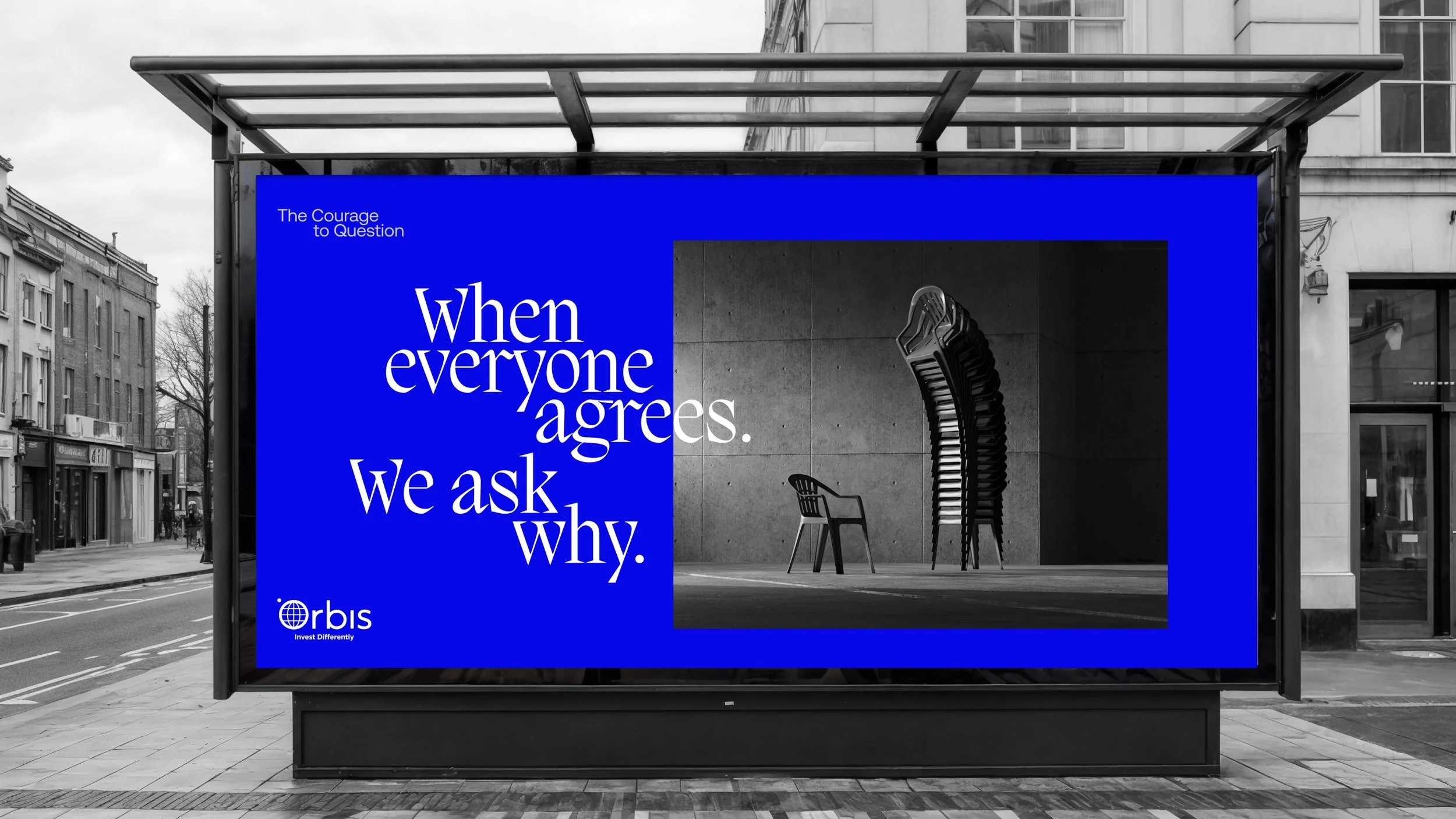
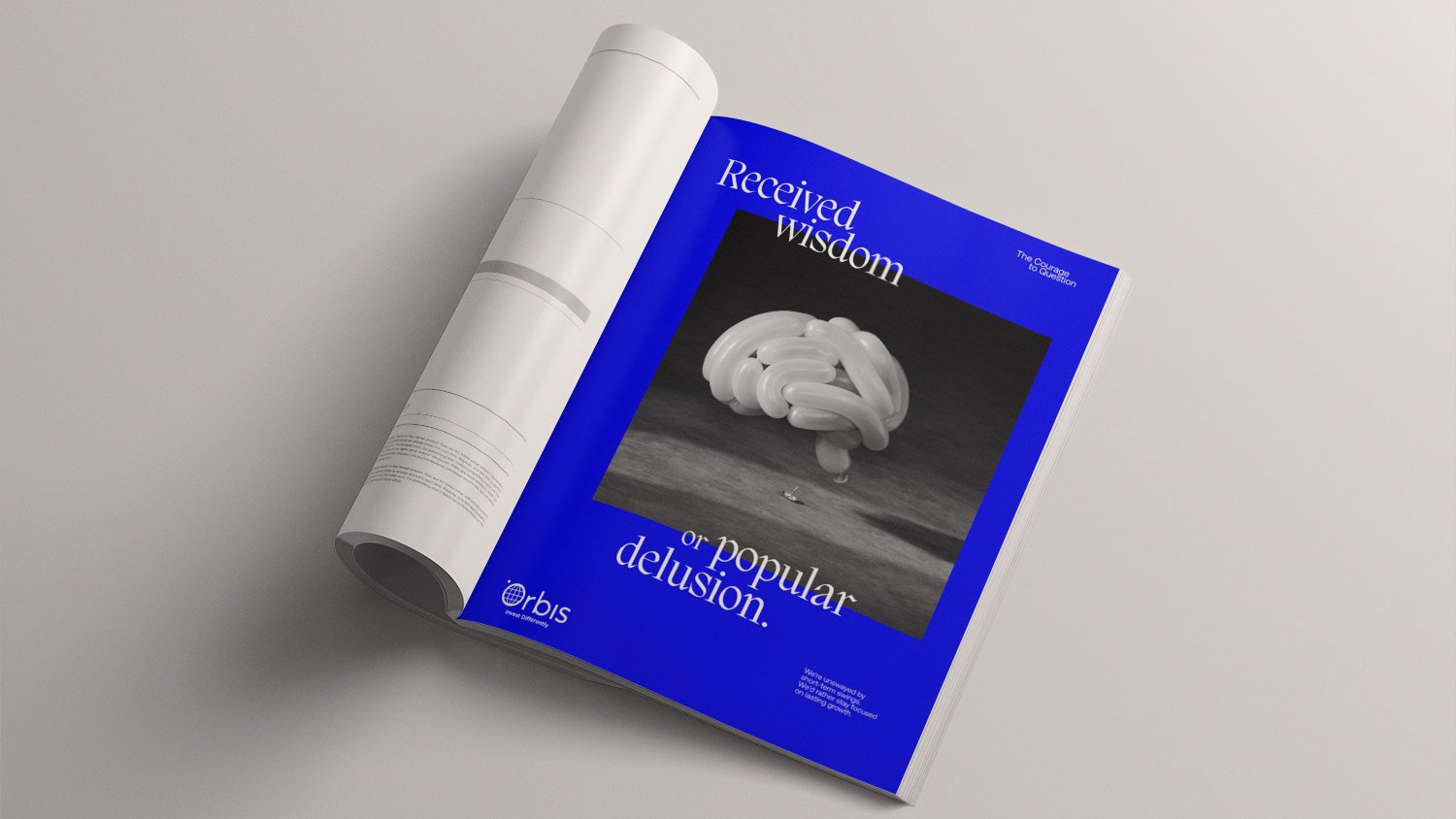
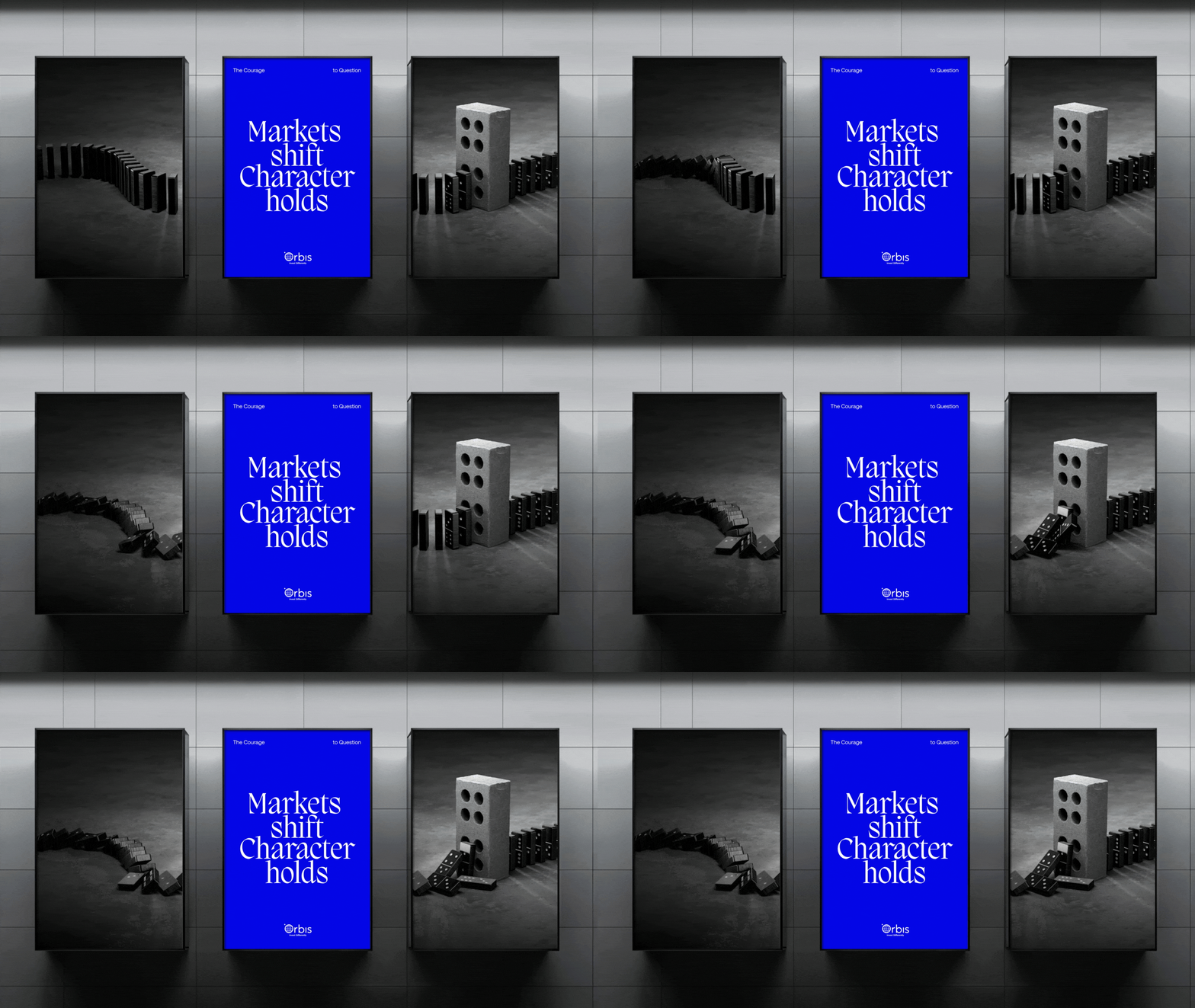
The print carried that idea into everyday objects. Chairs. Ice-cream cones. Bricks. Things you wouldn’t normally turn to for investment advice.
Each became a visual puzzle about consensus, perception or holding your ground.
They were designed to reward a little curiosity. To make people look again, spot the detail and realise there was more going on than first appeared.
Which all felt suitably Orbis-like.